
Loading...
Serving Sierra Vista, AZ and surrounding areas. (520) 895-7611
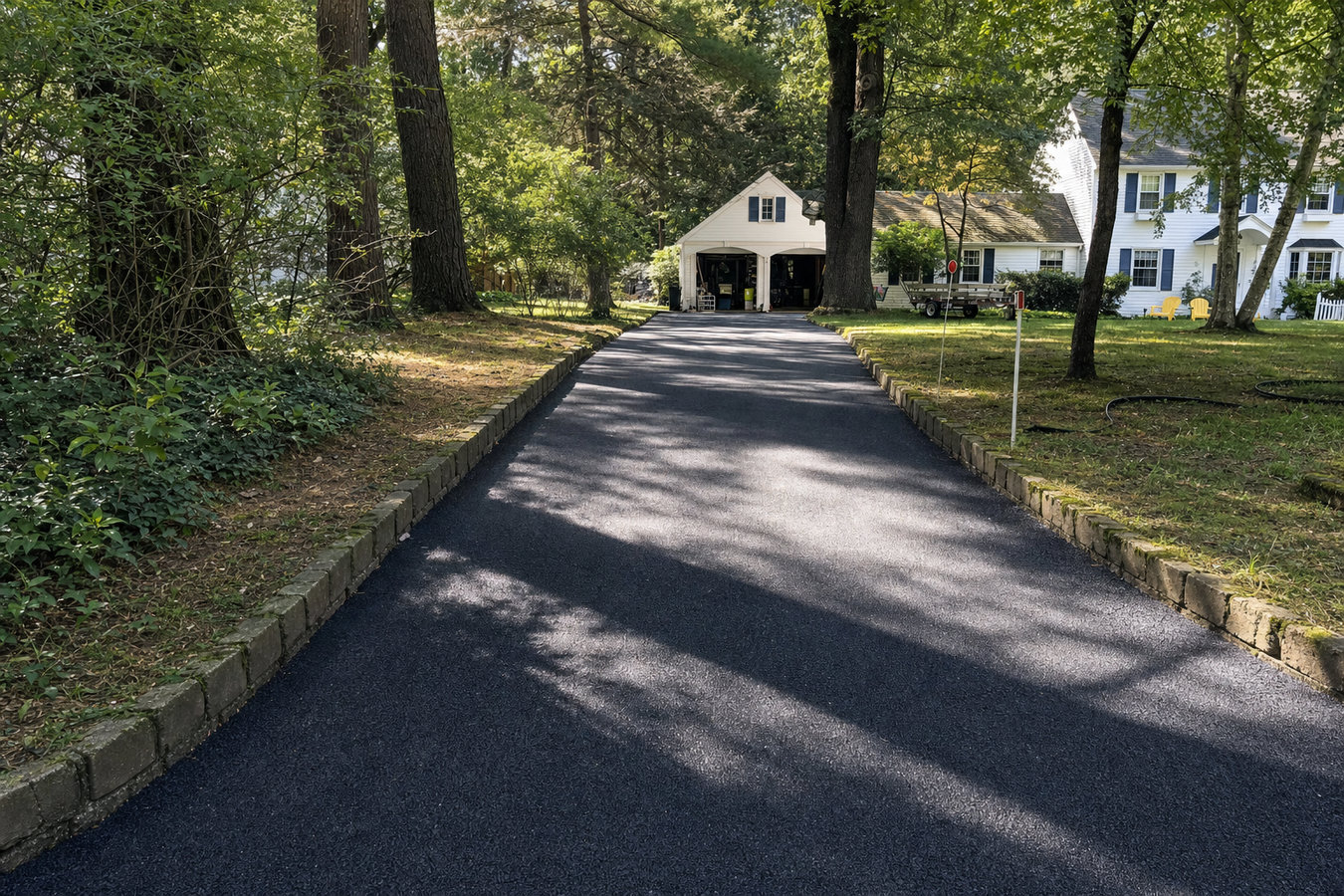
Sierra Vista Asphalt Paving is your local asphalt paving contractor in Elgin, AZ, providing driveway paving, grading, and drainage solutions for ranch and vineyard properties throughout the Sonoita Valley. We have served rural Santa Cruz County since 2020 and respond to every inquiry within one business day.
Rural properties in Elgin typically have long gravel or dirt driveways that rut and wash out every monsoon season, requiring gravel top-offs that never solve the underlying drainage problem. Our driveway paving service includes proper base preparation - breaking through caliche layers where needed, compacting a solid sub-base, and grading for drainage - so the finished surface holds up through both monsoon season and winter freezes at this elevation.
Large rural parcels in the Sonoita Valley often have uneven terrain, caliche close to the surface, and no established drainage paths for runoff. Grading and excavation work shapes the land, removes problem material, and sets up the drainage slopes that any paved surface needs to last in this environment. Without that foundation, even good asphalt fails early.
Elgin properties on clay-rich soils face a recurring problem: monsoon rain saturates the ground quickly, and water that has nowhere to go sits against foundations and pavement bases until it does real damage. Channel drains, culverts under driveway crossings, and surface regrading give that water a controlled path off the property before it undermines your pavement or building.
At 5,000 feet, Elgin gets genuine winter freezes, and any water sitting in a surface crack overnight will expand as it freezes and push that crack open further. Sealing cracks before the first hard freeze of the season is the most cost-effective maintenance step a rural property owner can take to extend pavement life here.
The dry months before the Sonoita Valley monsoon arrives bring intense UV exposure that oxidizes asphalt binder quickly at this elevation. Sealcoating renews the surface, seals minor cracking, and gives your pavement a protective barrier against both UV damage and water intrusion from the next monsoon season.
Potholes on rural driveways in Elgin often form after monsoon storms when water saturates the soil below the surface and vehicle loads push through the weakened spot. Patching potholes promptly with properly bonded material stops the failure from spreading and extends the useful life of the surrounding pavement.
Elgin is an unincorporated community in Santa Cruz County sitting at roughly 5,000 feet in the open grasslands of the Sonoita Valley. Most properties here are large rural parcels - ranches, vineyard operations, or rural homesteads on several acres or more - accessed by long private driveways that branch off State Route 82 or unpaved county roads. Those driveways face conditions that simply do not exist in suburban Arizona. The soils in this part of southeastern Arizona commonly include caliche, a hard calcium-carbonate layer that forms just below the surface. Caliche blocks water drainage through the soil. When water cannot drain downward, it accumulates at the base of any pavement above it, and from there it either freezes in winter, expanding and lifting the surface, or sits through the wet season saturating the base material until vehicle loads push through it.
The climate at this elevation adds pressure from two directions. Summers bring intense UV exposure during the dry months before the monsoon, breaking down asphalt binder faster than it would in a more humid or shaded environment. The monsoon season - typically July through September - delivers heavy thunderstorms that can drop significant rain in a short period, and the clay-rich soils here absorb water slowly, creating runoff that concentrates along driveway ruts and scours out whatever gravel or base material is sitting there. Then winter arrives and the freeze-thaw cycle starts: hard overnight freezes at 5,000 feet are a regular occurrence from November through March, and any surface crack or saturated base section is vulnerable to expansion damage. Managing all three of these failure drivers - caliche drainage, monsoon runoff, and freeze-thaw cracking - requires planning that begins with the sub-base, not the asphalt surface.
Our crew works throughout Elgin and the surrounding Sonoita Valley regularly, and we understand the local conditions that affect paving and grading work here. State Route 82 is the main road through the area, running west toward Nogales and east toward Tombstone and Bisbee. Most properties we work on require turning off SR 82 onto dirt or gravel ranch roads - getting equipment to the site takes planning, and we factor travel and access into every estimate. All permits and inspections for unincorporated Elgin come from Santa Cruz County, whose offices are in Nogales, and we are familiar with county grading permit requirements for projects that involve significant earthwork. There are no local building supply stores in Elgin, so all materials are sourced and hauled from suppliers in Tucson or Sierra Vista - a logistics consideration that affects both cost and scheduling.
Elgin sits in the same broad valley as Sonoita, just a few miles east along SR 82. The two communities share similar terrain, climate, and soil conditions, but Elgin tends to be even more spread out, with fewer services and longer average driveway runs on working ranch parcels. The Elgin-Sonoita area is recognized as the birthplace of commercial winemaking in Arizona, and many properties in the valley are active vineyard operations with access roads and equipment staging areas that require solid surface work. We also serve neighboring Sonoita a few miles west, and Hereford to the southeast, where the terrain shifts toward the San Pedro River corridor and drainage challenges come from a different direction.
Reach us at (520) 895-7611 or use the contact form on this site. We reply within one business day. When you call, let us know the general location of your property - access routes matter when we are planning a trip out to a rural Elgin address.
We visit your property to measure the driveway or work area, check the existing surface, probe for caliche depth, and assess drainage conditions. The estimate reflects real local costs - material haul from suppliers, access conditions, and sub-base work. You do not need to be present for the assessment, but it helps to walk the site together.
We schedule work to avoid the peak of monsoon season where the timeline allows, so fresh pavement is not immediately tested by heavy storms. Caliche is broken up where it blocks drainage, the sub-base is compacted to spec, and grading slopes are established before any asphalt goes down. The surface work is the last step, not the first.
Before we leave, we walk the finished work with you and explain the drainage flow and any areas to watch. We tell you the right timing for the first sealcoat based on Sonoita Valley climate conditions, so you know exactly when to schedule that next maintenance step for maximum protection.
We serve Elgin, AZ and the surrounding Sonoita Valley. Call us or send a message and we will respond within one business day with a free on-site estimate.
Elgin is a census-designated place in Santa Cruz County, sitting in the broad grassland valley east of Sonoita along State Route 82. With a population of only a few hundred people spread across a large land area, it is one of the more sparsely settled communities in the region. There is no town government - Santa Cruz County handles all public services and permits for unincorporated Elgin. Most of the residential properties here are long-established rural homesteads, working ranches, and vineyard operations. Structures range from older ranch-style homes built decades ago to newer custom builds on large parcels, and most properties include outbuildings, barns, or equipment sheds alongside the main house. The lot sizes and distances between neighbors are a far cry from suburban Arizona.
Elgin holds a notable place in Arizona history as the birthplace of commercial winemaking in the state - the first commercial vineyard in Arizona was planted here in the 1970s, and vineyards and small wineries are still an important part of the local economy and character. The valley's high elevation, warm days, and cool nights create conditions that drew those early vintners here and continue to define the area's appeal. Neighboring Sonoita sits just a few miles west at the SR 83-SR 82 junction and shares the same valley character and service needs, while Hereford to the southeast marks where the grassland gives way to the San Pedro River valley and a different set of terrain and drainage conditions.
Protect your pavement and extend its life with professional sealcoating.
Learn MoreFull-service parking lot paving for commercial and multi-unit properties.
Learn MoreComprehensive upkeep programs that protect your pavement investment.
Learn MoreDurable curbs and walkways that define and protect your property.
Learn MoreRural parcels need a contractor who understands caliche, monsoon drainage, and high-elevation winters. Call us today or submit a request and we will schedule your on-site estimate.