
Loading...
Serving Sierra Vista, AZ and surrounding areas. (520) 895-7611
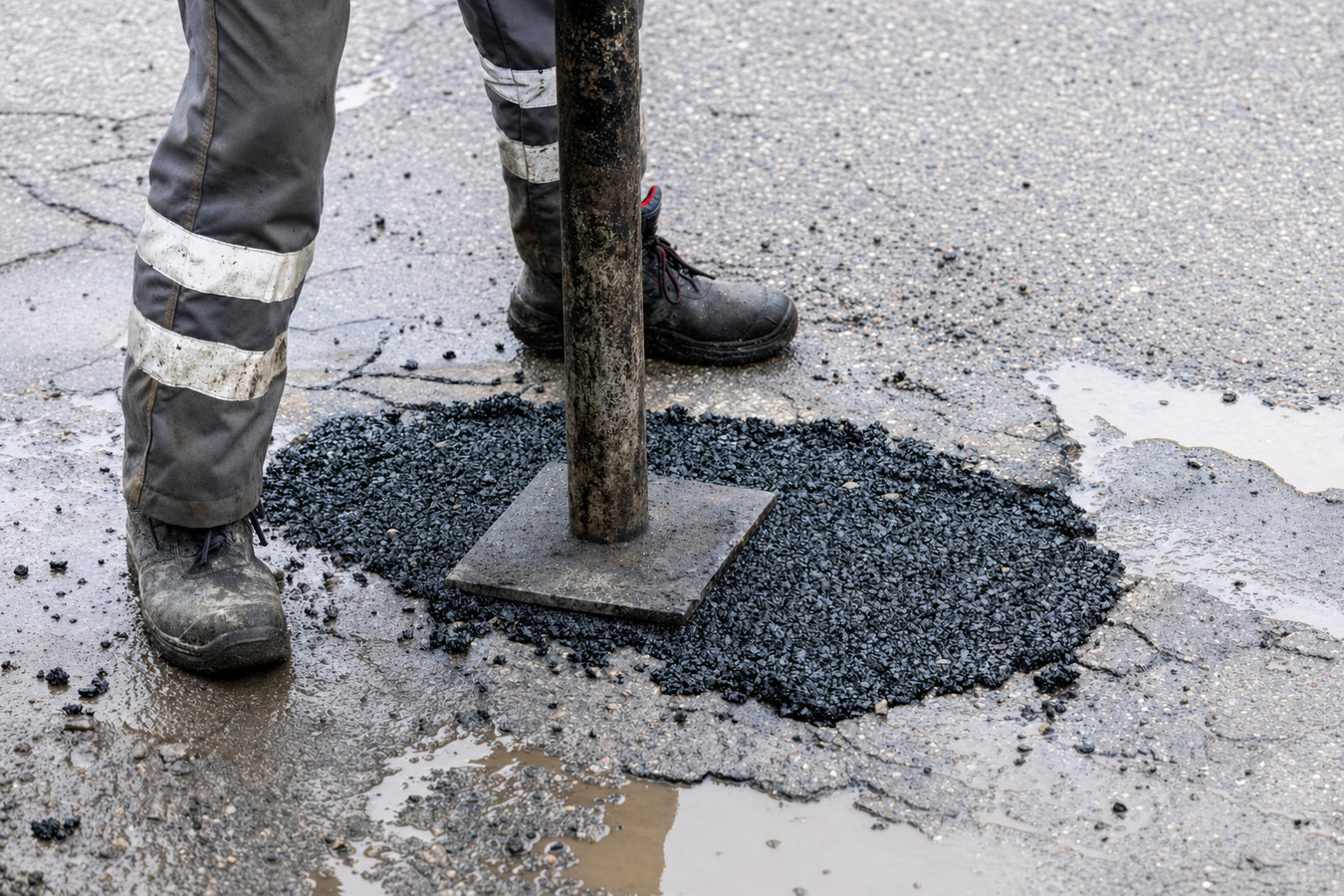
Cracks, potholes, and broken edges get worse with every monsoon storm. A repair done right - with proper prep and the right materials for Arizona conditions - can hold for years.
Asphalt repair in Sierra Vista means cutting out or filling in damaged sections - cracks, potholes, sunken spots, and crumbling edges - and replacing them with compacted asphalt material suited to the local climate. Most residential repairs are completed in a few hours to a full day. A small crack addressed today costs a fraction of the repair needed after another monsoon season works water into the base.
Sierra Vista homeowners face a faster deterioration cycle than most. High-altitude UV exposure at roughly 4,600 feet dries out asphalt binder faster than in low-desert Arizona, and the monsoon season adds fast-moving water that exploits every existing weakness. Understanding which type of repair fits your damage is important - a crack that needs full-depth replacement will not hold with surface fill alone.
After repairs are complete and fully cured, pairing the work with our asphalt crack sealing service extends the repair's life by blocking future water and UV penetration at the surface level.
A network of cracks that looks like alligator skin means the base is compromised, not just the surface. In Sierra Vista, this pattern develops faster than most homeowners expect because intense UV exposure dries out the asphalt binder year after year. Simple crack fill is usually not enough at this stage.
A pothole or a section that feels soft underfoot means monsoon water has worked its way under the pavement and weakened the base. Left alone, potholes grow quickly and can damage vehicle tires and suspension. Early repair costs a fraction of the fix needed once the damage spreads.
Healthy asphalt is dark and slightly flexible. A light-gray surface that crumbles at the edges has had its binder cooked out by UV - a common result of the high-altitude sun in southeastern Arizona. Repair and sealing now can save the surface from full replacement.
Standing water after a monsoon storm is a warning sign. Water sitting on the surface finds its way into any existing crack, softens the base below, and accelerates damage. Addressing drainage and leveling issues early avoids far larger repairs later.
Our asphalt repair work ranges from targeted crack filling to full-depth section replacement. For narrow cracks, we use flexible sealant that moves with the surface through temperature changes. For larger damaged areas, we cut to clean edges, check the base for stability, and place compacted hot-mix asphalt. Damaged driveway edges - a frequent issue in southeastern Arizona after monsoon season - are rebuilt so they have proper support and a clean transition to the surrounding surface. For homeowners with extensive surface damage that has progressed beyond repair, we can also assess whether a full crack sealing program or a pothole repair approach is the right next step before more surface work is done.
After each repair is complete and cured, we advise on whether a sealcoat makes sense as a follow-up step. In Sierra Vista, UV oxidation is the dominant cause of asphalt deterioration, and sealing repaired surfaces extends the work life significantly. Whether you need a single patch or repairs across multiple sections, we give you a written estimate before any work begins so there are no surprises.
Best for narrow cracks that have not yet widened into structural failure. Flexible sealant keeps water out of the base and slows oxidation.
For localized areas of pitting, spalling, or shallow damage where the base beneath is still stable and sound.
Required when the base has been compromised - potholes, large sunken sections, or damage caused by soil movement below the surface.
The two biggest threats to asphalt in Sierra Vista are UV oxidation and monsoon water intrusion, and both are more severe here than in most U.S. markets. At 4,600 feet elevation, UV radiation is stronger than at sea level and breaks down the asphalt binder year-round, not just in summer. Then from July through September, fast-moving monsoon storms flood low spots and drive water into every open crack. A contractor who uses standard patching approaches without accounting for these conditions will deliver repairs that look fine on day one but deteriorate quickly. We have been working in this specific climate since 2020 and choose materials and methods accordingly.
Clay-bearing soils in the Sulphur Springs Valley add another layer of complexity. Soils that swell when wet and shrink when dry put upward stress on pavement from below, which is a secondary but real contributor to cracking in this area. We assess base stability before patching so the repair addresses root causes rather than just the visible damage. We cover all of Sierra Vista and the surrounding communities, including Hereford and Bisbee, where older paved surfaces on rural and semi-rural properties often have drainage and soil conditions requiring extra attention.
We respond within 1 business day to schedule your free on-site estimate. Most residential repair estimates take only a short time, and there is no obligation.
We inspect the size and depth of the damage, check the base condition, and assess drainage patterns. This determines whether you need crack fill, a surface patch, or a full-depth repair.
We clean out loose material, cut damaged sections to firm edges, and ensure the base is stable before any new asphalt goes down. Skipping prep is the most common reason repairs fail early.
Fresh asphalt is placed and compacted to match the surrounding surface. We give you a specific wait time before driving on it and advise on when to schedule a follow-up sealcoat.
We respond within 1 business day. Your estimate is free and there is no obligation. After you submit, someone from our office calls to schedule your on-site visit.
We clean damaged sections to firm edges and check base stability before patching. Shortcuts here are the primary cause of repairs that fail within a season. Our process treats each repair as a long-term fix, not a cosmetic cover.
At 4,600 feet elevation, Sierra Vista gets more UV than low-desert Arizona. We use repair materials suited to the oxidation and heat conditions here so the work holds up under the high-altitude sun, not just average conditions.
We carry an Arizona contractor's license and full liability insurance on every job. You can verify our standing for free through the Arizona Registrar of Contractors at azroc.gov before committing to anything.
Clay-bearing soils in the Sulphur Springs Valley can shift under pavement and break repairs from below. We assess base stability and drainage as part of every job so the repair addresses the cause, not just the symptom.
Arizona requires paving contractors to hold a state-issued license, and the Arizona Registrar of Contractors offers a free public lookup so you can verify any contractor before signing a contract. For more on asphalt deterioration causes including UV oxidation, the National Asphalt Pavement Association publishes industry guidance on repair standards and material performance.
Seal narrow cracks before water and UV exposure turn them into larger repair jobs.
Learn MoreTargeted pothole repair that addresses both the surface and the compromised base underneath.
Learn MoreEvery monsoon storm makes existing damage worse. Schedule your free estimate now and get the work done before the next rainy season hits.