
Loading...
Serving Sierra Vista, AZ and surrounding areas. (520) 895-7611
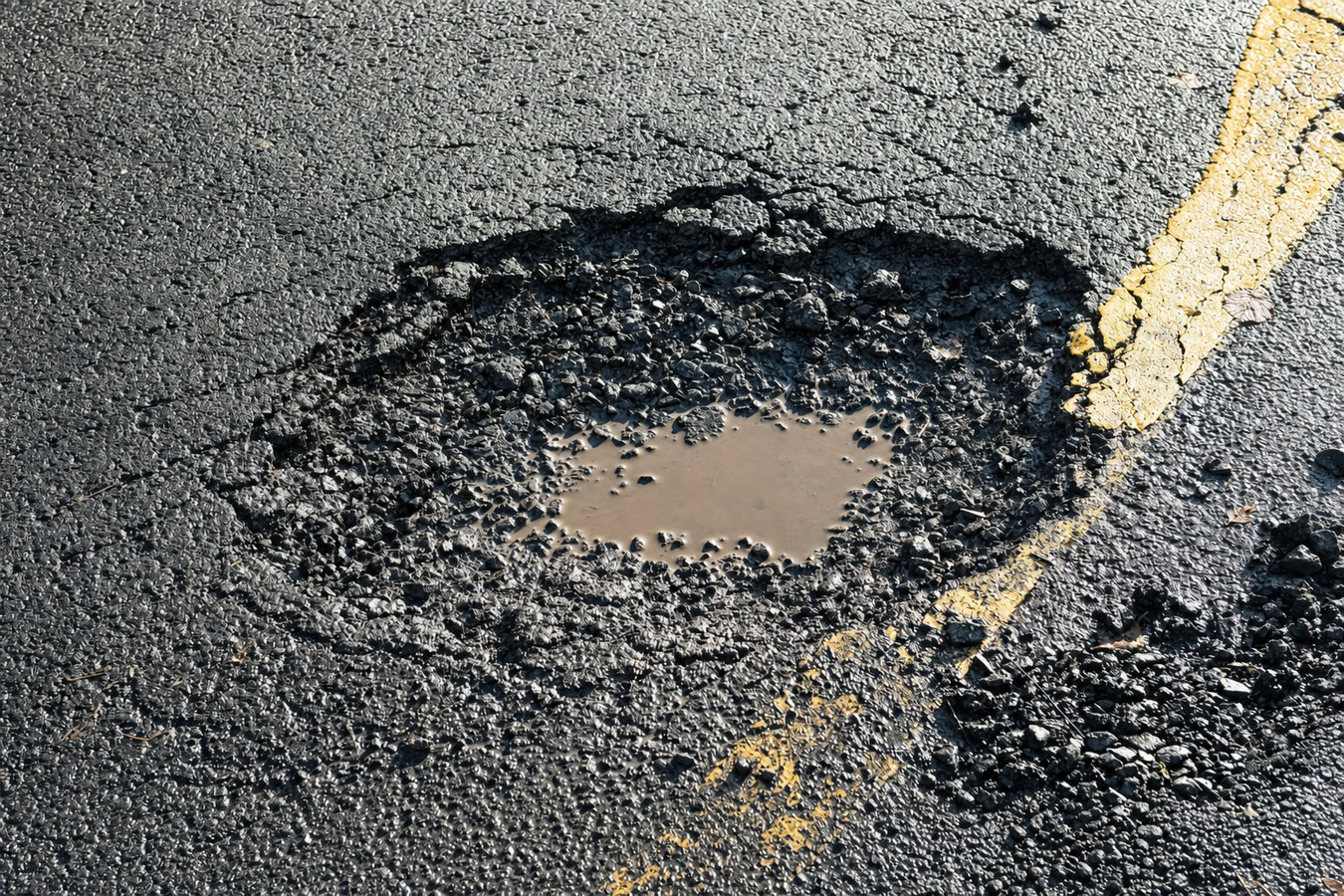
A bad patch fails in a season. We cut clean edges, check the base, and compact hot-mix asphalt so your driveway handles the next monsoon - and the one after that.
Pothole repair in Sierra Vista means cutting or milling the damaged area to clean, stable edges, removing loose material, checking the base for softness, and filling the void with fresh hot-mix asphalt compacted flush with the surrounding surface. Most single-hole jobs are done in a few hours; larger or base-damaged repairs may take a half day.
Sierra Vista driveways take a beating from the annual monsoon cycle. Heavy, fast-moving rainstorms force water into any weak spot and wash out the base material underneath - which is how most potholes here start. If the base is soft, a surface patch alone will fail within a season. That is why every repair we do starts with a check of what is happening beneath the asphalt, not just on top of it.
If your driveway has multiple problem areas or widespread cracking beyond just a few holes, it may be time to look at asphalt repair or a full resurfacing rather than patching hole by hole.
A clear hole or sunken area in the asphalt is a pothole - even if it is still small. In Sierra Vista, these often appear or deepen right after a monsoon storm when rushing water has washed out the material underneath. The sooner it is repaired, the smaller and cheaper the fix.
When the edges of a crack start to break apart and you can see loose chunks of asphalt, the surface is failing and a pothole is forming. Left alone through another monsoon season, that crack will almost certainly become a full hole that costs more to fix.
If a section of your driveway feels spongy or sounds hollow when you tap it, the base beneath has likely softened or washed out. This is especially common where monsoon runoff concentrates - near downspouts, at low points, or along the edges of the driveway.
Standing water that collects in the same low spot after each storm signals that the surface has already deformed. Every time water sits there it accelerates the damage underneath, making a small repair into a larger one if you wait.
We handle pothole repair as a standalone job or as part of a broader driveway restoration. For isolated holes with a sound base, we saw-cut clean edges, remove loose material, and compact hot-mix asphalt flush with the surrounding surface. For holes where the base has failed - which is common in Sierra Vista after a hard monsoon season - we dig deeper, rebuild the base layer, then patch the surface so the repair holds long-term rather than failing again in six months.
If your property has widespread cracking or multiple sinking sections beyond a few isolated holes, we can evaluate whether grading and excavation is needed to address underlying soil movement, or whether a full resurfacing is more cost-effective than patching every problem spot individually. We give you an honest picture of what makes sense before any work starts.
Best for isolated holes where the base is still solid and the surrounding asphalt is in good condition.
Right for holes where the base material has washed out or softened - common after monsoon events in Cochise County.
Efficient for driveways with several problem spots - repairing everything in one visit saves time and reduces cost per hole.
Ideal after the rainy season - we inspect the driveway, identify all damage, and give you one written quote for everything.
Sierra Vista sits at roughly 4,600 feet in the Sulphur Springs Valley, and the soils here contain expansive clay that swells when wet and shrinks when dry. That expansion and contraction cycle moves the ground beneath your driveway every year - softening the base during monsoon season and tightening it back up as things dry out. That is why potholes here tend to reappear in the same spots: the surface keeps failing because the ground below keeps moving. A repair that ignores the base is just a temporary fix. Residents in communities like Hereford and Palominas deal with the same soil conditions we see across Sierra Vista.
The monsoon window - roughly July through September - is the primary damage driver for driveways in this area. Heavy, fast-moving storms dump water onto hot pavement, forcing it into any crack or weak spot and washing out base material underneath. UV oxidation during the rest of the year dries out and brittles the asphalt surface, making it more vulnerable by the time the rains arrive. Planning repairs in late spring, before the monsoon season begins, is the most cost-effective approach for Sierra Vista homeowners. For additional context on local caliche and clay soil conditions, see the USGS resources on desert soil types.
Tell us the size and location of the damage - or send a photo. We reply within 1 business day and schedule a site visit if needed before quoting. There is no charge for the estimate.
We check the base for softness or hollow spots before recommending a repair method. You get a written estimate that spells out the method, materials, and total cost - no surprises.
We cut or mill the damaged area to clean edges, remove all loose material, rebuild the base if needed, and compact hot-mix asphalt flush with the surrounding surface so water sheds properly.
In Sierra Vista's warm, dry climate, a hot-mix patch is typically firm enough for vehicle traffic within a few hours. We give you the all-clear before leaving so you know exactly when to use the driveway.
Free written estimate. We check the base before we quote. No pressure.
Before we fill any hole, we probe the surrounding area for softness and hollow spots. If the base has washed out - which is common in Sierra Vista after a hard monsoon - we rebuild it first. That is what makes the difference between a patch that holds for years and one that fails by next summer.
Cold-patch fills are easy to apply but rarely last more than a season or two in this climate. We use hot-mix asphalt compacted in layers - the same material and method used for full paving projects - so the repair bonds tightly and holds up under traffic and UV exposure.
Arizona requires paving contractors to hold a current state contractor's license, verifiable through the Arizona Registrar of Contractors. That license means accountability to a state oversight body - you are protected if something goes wrong, in a way you are not with an unlicensed crew.
We know how the clay-rich soils in the Sulphur Springs Valley move across the seasons, and we know how monsoon runoff behaves on driveways in this part of Arizona. That local knowledge shapes how we repair - not just what we pour into the hole.
Every repair we do starts with an honest assessment and ends with a written record of exactly what was done. If a patch needs follow-up sealcoating to protect the new work from UV damage, we will tell you that too - before the next monsoon season tests it.
When recurring potholes point to shifting soil beneath the surface, proper grading and base work addresses the root cause.
Learn MoreFor driveways with widespread cracking or multiple failing sections beyond just a few holes, full asphalt repair may be the right call.
Learn MoreEvery rainstorm that passes over an unrepaired hole washes out more base material and widens the damage - call us now and get it fixed while conditions are ideal.